Property Data
Generation Consumption & Storage
Data Exchange
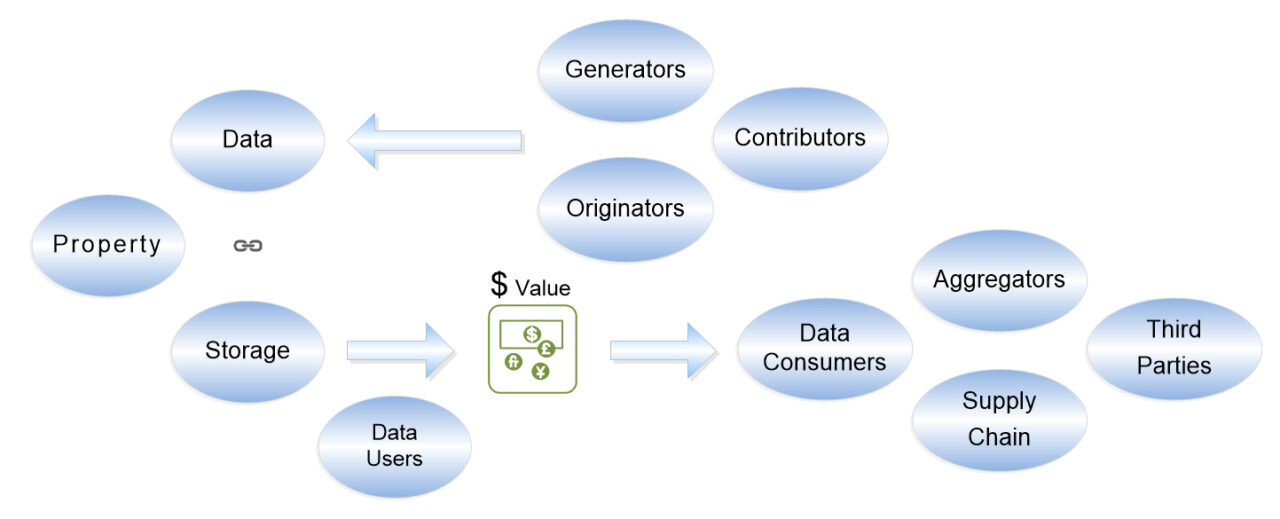
Build, tenant improvements, management and service provider ecosystems are all primary sources of property data, original generation, future utility, sustainable value and continued contributions. Operation and maintenance of systems and equipment provide a continuous flow of data updates usually stored in isolation or locally for onsite access.
Independent Entities
The business of property is based on development of an asset in build, operation, management and ongoing upkeep. Improvements rest on a foundation of independent, highly diverse service providers with subject matter expertise. Specialties span business, infrastructure regulators and dozens of trades usually interacting with property on-demand.
SLACi AI provides autonomous data access and exchange between diverse users and data-driven technologies increasingly evolving around management, tenant and contractor related services in build, operation and maintenance of property assets.
Accessible data provides logistical insight and autonomy for service providers. Foresight that improves preparation, decision making, selection and dispatching of personnel reducing manpower demand and the cost of property services.
In addition, the CaPSCi data infrastructure help physical assets capture digital data that originates with these third parties, often once removed from property owners and management and discarded for the same.
AI & Data Access Management
SLACi technologies establish a digital relationship between the physical property, its data, management, service provider and regulatory ecosystems that develop dynamically on-demand around routine service requirements, scheduled and unscheduled events.
Data management APIs assure the property owner/investor retains data ownership, control and authority over internal and external user access. Business access is limited to insiders whereas fee based access to data by external users require owner privileges.
Access management AI autonomously authenticate access and exchange between diverse users, fragmented technologies and data distributed throughout the industry.
Authentication must pass several verification processes but initiating authentication requests require a minimum of three AI data libraries including the property . . .
PIM – Data Storage & Exchange
Property Information Models (PIM) are containers of information about a property including its grounds, structures, operation and service providers, etc.
AEC Professionals have been producing digital data on build projects for decades. Deliverables continue to follow analog methods using modern file technology to transfer mountains of paper (in file pages) between owners and other project stakeholders.
Digitized data reduces file technology to data pairs (bytes) eliminating manual processes to autonomous exchange between applications that generate data and the property data storage containers (CDE). Direct to CDE storage instantly makes the data available for review and analytics by user and business applications.
Strategic Data Exchange
Protecting Data Value!
Property owners, management and service providers may unwittingly give away private data without knowing its value. Compliance platforms are just one example of business models that leverage a property’s list of service providers to earn a profit.
In business circles, there’s always a price or cost attached to customer acquisition referred to as CAC. This metric is used to measure the dynamics of profitability and efficiency of sales. The CAC is much lower for SaaS companies that target markets easier to access than real estate.
In real estate, the CAC cost is five (5x) to nine (9x) times higher than traditional software markets. The value of that data to an SaaS firm can reach $1,800 per contact depending on who is acquiring the information. Its worth more if PropTech platforms successfully charge the PM’s contractors and service providers to do business with their own clients.
Its important for property owners and management firms to understand where value exists in their own proprietary data. Retaining value requires data owners minimize exposure in the use and retention of data provided to proprietary property technology platforms.
Data Utility
Independently integrated property technology environments simplify user experiences by automating repetitive and time consuming tasks.
CaPSCi identity infrastructures facilitate secure data exchange between property, management, tenant, contractor and other platforms. Technology autonomously identifies stakeholders strategically against private data libraries and service requirements.
Ubiquitous authenticated access and exchange of data allow information sharing between diverse and independent stakeholders to reduce scheduling tasks from a dozen emails over a few days to minutes eliminating several manual steps in the process and recovering valuable time.
Technology involved scheduling and dispatch platforms consume detail necessary to confirm availability, approve and automate work orders, assigned personnel and coordinate scheduling with tenants.
Digital communications (platform-to-platform) reduce workloads to oversight of technology processes.
Data Utility
Fully independent integrated property technology environments simplify user experiences by automating time consuming repetitive tasks.
The CaPSCi identity infrastructure facilitates secure data exchange between property, management, tenant, contractor and other platforms. Technology autonomously identifies stakeholders strategically against private data libraries and service requirements.
