
Property Information Model (PIM)
Directory Structures
A PIM for existing real estate assets will combine analog files and machine readable data to facilitate the digitization of property operation.
New construction deliverables should include both analog files and the projects’ details in machine readable or digitally formatted data.
The following illustrates a typical directory structure for organizing property data on a local hard drive or cloud account.

Created the initial PIM folders on a desktop to organize the property information. It would be advisable to extract files from large compressed containers to assure data (ie.: gas, water, ‘confidential’, etc.) are positioned in the proper locations. Once complete, the entire directory structure can be uploaded as-is to most file storage cloud platforms.
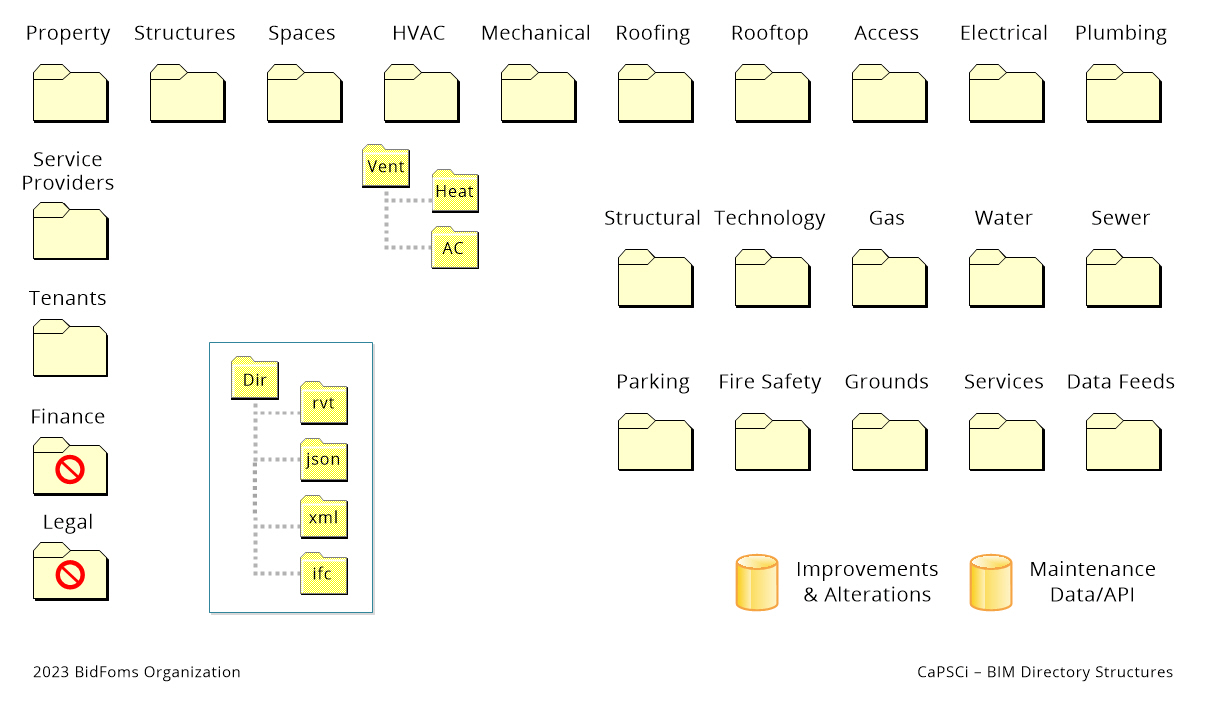
Stored locally or in the cloud, files can be categorized further by file type or extension as illustrated. Top level directories may contain additional sub category folders as illustrated under HVAC and include confidential folders accessible only to property owners.
BIM Accessibility
Property Investors and Owners initialize accessible and property autonomy by acquiring a cloud storage account from service providers like iCloud and Dropbox. Data storage platforms offer features to manually share individual files and folders with specific service providers and users.
The preferred storage platform for building owners will include version control and digitally transfer ownership of the account and all relevant BIM data upon sale of the property asset.
Building Autonomy
CaPSCi Identity Service Providers offer digital identity solutions for various Construction PropTech applications, types of users and technology platforms to help owners and managers start autonomizing property operations one piece at a time.
BidForms, a division of SLACi offers a sample of PIM Objects for review and discussion. Developers of Build PropTech for contractor and property manager use-case applications may contact our CaPSCi Team for additional information.