Autonomy in Property Operation
The necessity of management is underlined by their personal touch, relationships, field experience and insider knowledge on local markets. Technology adds another dynamic to these skills.
A data centric approach defines managers as an administrator who oversees data access for assets under management. But don’t over think data access management, this is one area where technology creates autonomy in workflows to improve user efficiency through effective objectives.
Real estate spans eight unique industry sectors, seven of them lead directly back to property and asset management. Data and a combination of stakeholder technologies will augment workflow integration between these diverse professionals who contribute to deliverables.
Challenges fragmented industries face may well be the foundation for a collective Real Estate Intelligence to emerge thru an interactive exchange of data between independent stakeholder technologies, said Anthony de Kerf, CEO of SLACi Inc.
The combined private data of assets, industry and stakeholders creates a foundation to recover manhours in management and augment declining workforces in build, supply chains and contractor services.
Public vs. Private Data
Publicly, the reputation of an asset is dependent on the accuracy of details accessible to consumer facing technologies like MLS. Human error is not unusual but applications injecting public data from sources that produce AI hallucinations is unacceptable.
Private property data positioned for AI replaces public information with a single source of reliable details to create value, improve workflow and eliminate error. Reliable information is necessary to help external agents accurately position property.
Property management companies and personnel highlight a unique value proposition managers offer the owner / investor. A firms operating model (BOM) as AI data will continue to play a critical role in positioning technology to enhance the human side of this digital transition.
Property operation is a moving target where variables change with the character of assets constantly in a state of flux adapting to age, markets and performance.
The concept of fully autonomous operation is challenged by many levels of decision making that coalesce at management before merging with owners. However, autonomous exchange of data between stakeholders will make it easier to analyze the findings and opinions of subject matter experts!
Note the use of “between users” as its unlikely property will ever operate entirely in an autonomous manner. However, “autonomous workflows” will improve efficiency to lower cost and recover valuable manpower for management and service providers.
Notwithstanding property management offers both a unique and boutique service. Boutique being on the side of whatever a property needs at any given point during its serviceable life. The most effective technologies will continue to be dependent on management as the conduit between the property, its data and service providers.
It required fifteen years of research to identify the core components our industry needs to complete the digital transformation of real estate. The most strategic and cost effective elements include deployment of private data on property and management firms as enterprise grade AI Data Libraries.
Data originated in build is also required on the public facing side of operations with a much higher demand on the backend to improve user efficiency and reduce cost.
Unfortunately, owners have yet to capture or store this deep data digitally.
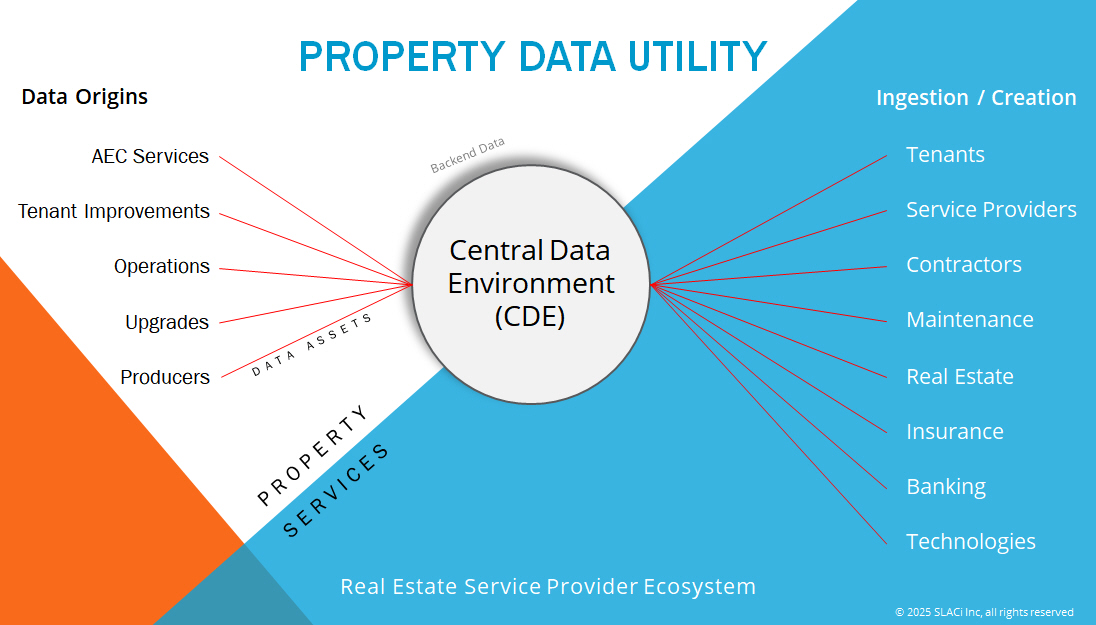
SLACi pioneered the CaPSCi Architecture to help owners capture and store build data digitally with secure access and exchange by service provider ecosystems.
“Transitioning air-gapped files into enterprise grade AI data offers utility in operations and economic value”
The only constant in the business of commercial property is the building and its grounds. That information is central to stakeholders on both the front and backend of operations.
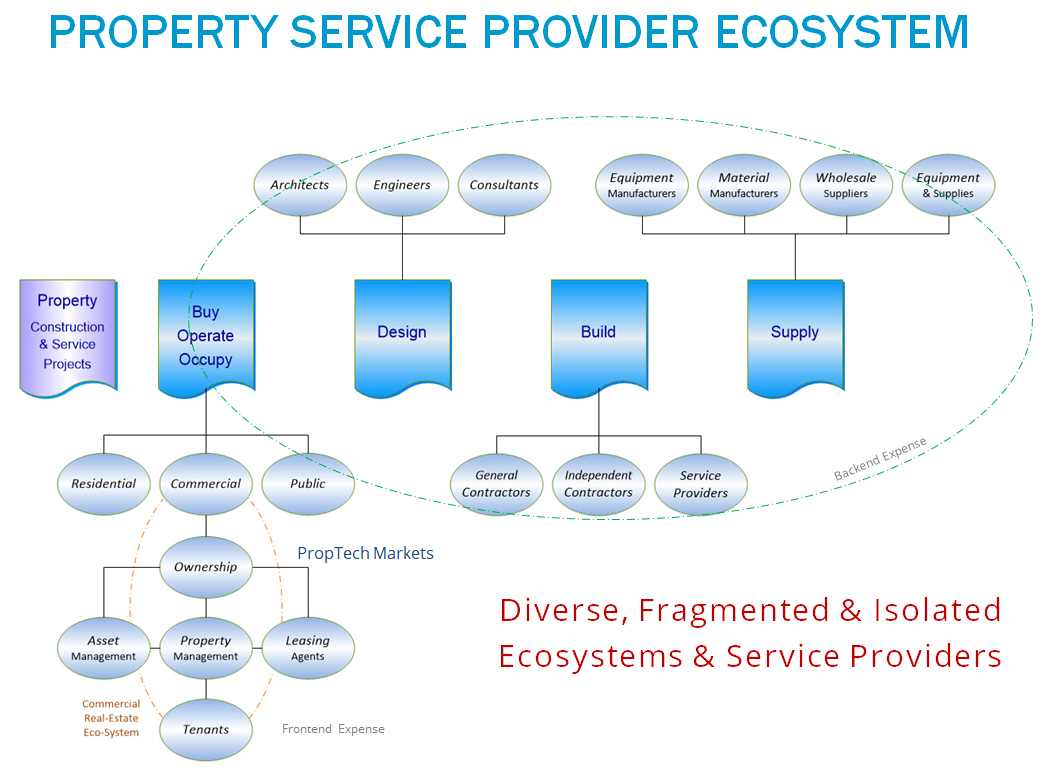
Property doesn’t operate under the umbrella of a single organization. Real estate revolves around highly diverse ecosystems of independent stakeholders fragmented by subject matter and expertise dependent on unique datasets distributed throughout the industry.
The common denominator between build, operation and service providers is in the unique dataset of each property. Engaging a single service creates cascading demand for data that radiates through various industry segments and sectors. A collection of deliverables create additional data to be captured for utility and retained for immediate decisions and future analytics.
Owners, management teams and service providers share common and equal dependencies on property details in both commercial and residential markets. An independent data centric technology approach allow diverse stakeholders to adopt solutions specific to their field and contributions to an end deliverable on the property or specific project.
Autonomy
Autonomous workflows between users in different fields and organizations requires a minimum of three data libraries. The primary library is the property data with an accessible CDE in the cloud. A public hard drive where build and operational data can be captured and stored for continuous utility and routine updates.
Management is the second most important data library in real estate. They offer critical details required to guide technology on operating decisions and manage data access. Service provider libraries provide information essential to real time communications, user security, trade efficiency and digital deliverables.
Data is foundational to workflow autonomy. Property and service provider AI data libraries provide essential detail technologies need to integrate workflows in such a diverse ecosystem of property assets, interests, oversight and types of data. The market price to build an AI data library for property depends on the asset and available data. Independent service providers may spend a few hundred to a few thousand or more. In both cases, the total cost will be determined by sophistication of the data library as built and expensed over time.
Data ROI
To create value, data, storage and management must transfer with a change in ownership. SLACi digitally link data technologies to the physical asset. Portability simplifies on-boarding processes and exchange of property data between owners, markets and industry.
Thought leaders predict property valuations will improve by 3% to 5% proportionate to the quantity, quality and utility of its data. A 1.5% appreciation is anticipated by implementing core components in transitioning towards a digital data policy.
Hypothetically, if deep data on U.S. commercial property was available today, data analytics markets would generate an estimated $6 billion in annual revenue for property owners.
Join our live discussions!
More about data:

AI Data Library Intro

Best Storage Options for Property Data
